
Arup adopts a model to measure the maturity of BIM in its projects

Virtual design tools such as 3D modeling and simulation are becoming increasingly sophisticated and integrated. Their potential increases when they are fueled by advanced design processes that enable interaction between designers and between each design element.
This process, known as Building Information Modeling (BIM), is transforming the way cities, buildings, and systems are designed and managed throughout their lifecycle.
An intelligent model
Many people associate BIM with construction, but the reality is that it can be thought of as a virtual prototype , whether of a building, an infrastructure system, or even a city. Virtual design allows the model to be simulated and evaluated before construction, helping professionals involved in a project understand the design much more fully and in advance. This helps them identify inconsistencies much earlier, thus saving time and costs in its development.
Thus, this digital prototype becomes a reference for better construction. And it remains so even after the asset is transferred to the owners and operators. BIM achieves all this because it is not simply a 3D animation; it goes much further. It is an intelligent project model in which information is integrated into the project so that it can be shared among stakeholders in the process.
All the information associated with the model—from material characteristics to water pressure in plumbing systems, for example—helps the project team understand the implications of their decisions, as well as their limitations and opportunities. An intelligent model provides greater precision in projecting feasibility , costs , schedules, and timelines.
At Arup , BIM is advancing with exceptional rigor, bringing teams closer than ever to achieving the “total design” of systems and structures.
The BIM Maturity Model
The Arup BIM Maturity Measure Model is a simple tool for assessing the maturity—that is, the level and success—of BIM methodology implementation in a project. This measurement system is based on work conducted by Pennsylvania State University under a Creative Commons 3.0 license and is being adopted by several leading engineering firms around the world.
“By using the BIM maturity measures we have achieved, we are able to assess and adopt a common vision of what BIM is, the best practices implemented, and the depth of its dissemination across our groups and regions,” explains Arup. It is a discipline-agnostic tool that seeks to measure the extent to which a project has successfully used the BIM methodology and how its implementation has developed. “We are working to make BIM maturity measures available for broader use in the industry to demystify BIM, reduce ‘BIMwash,’ and help increase capacity across the industry,” the company explains.
This measurement process was launched a couple of years ago, on December 2, 2014, at Autodesk University and is available for download along with a presentation shown at the event. For more information on the BIM Maturity Model, please email [email protected] .
Shared knowledge, expansion of possibilities
Throughout its long history, Arup has built and developed integrated work processes to shape BIM, providing a highly collaborative methodology. In Arup’s words: “This method allows information to flow freely between architects, engineers, technical specialists, owners, and operators, promoting open and productive working relationships .”
Using a working model allows engineering to assist teams located around the world, reducing design conflicts , becoming more efficient, and speeding up timelines. It also allows them to optimize designs, even in confined spaces, and align efforts to achieve greater energy efficiency.
On numerous occasions, Arup’s modeling approach has delivered highly original and ambitious designs . A good example of this is the facade of theBeijing National Aquatics Center. Similarly, without BIM, engineering would never have been able to introduce naturally ventilated broadcast studios at BSky Harlequin 1 or design the world’s first LEED Platinum data center in Frankfurt.
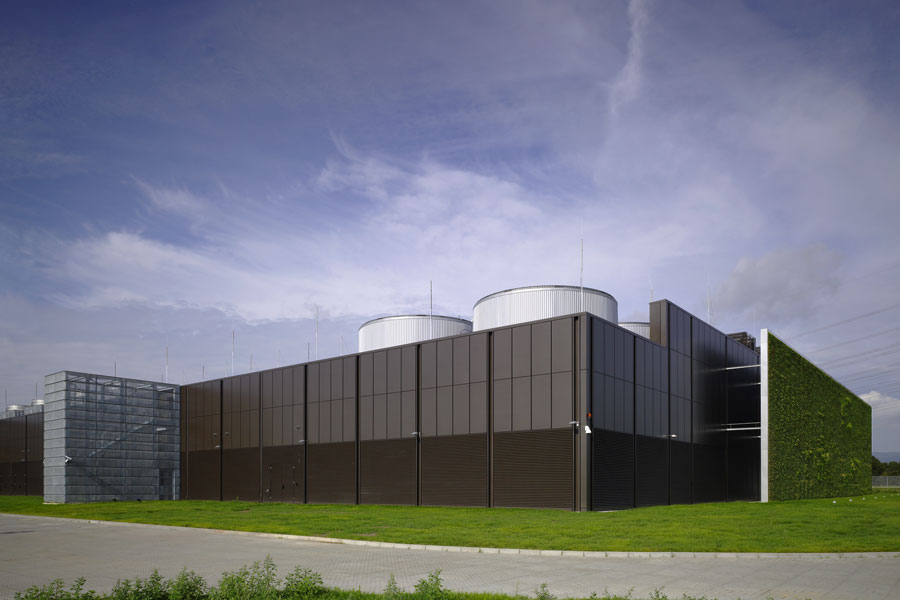
Citi’s first LEED Platinum data center in Frankfurt. | Source: Arup


