
Dogen City, the Japanese floating city that could become a model for the world

Japan is developing a floating city project that is self-sufficient and resilient to natural disasters . The city, called Dogen City, will be located in the East China Sea and will have the capacity to house 10,000 people.The construction, led by Japanese startup N-ARK, will take place on a floating platform measuring 1.58 kilometers in diameter and about 4 kilometers in circumference, equipped with a series of systems that will make it self-sufficient, including solar and wind power plants, water and waste treatment systems, and a public transportation network.
Dogen City as an ally of security and medicine
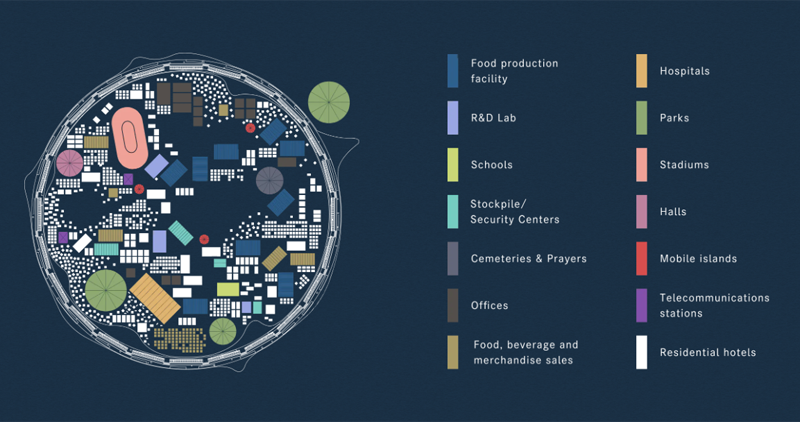
Dogen City will serve as a refuge from natural disasters such as tsunamis, earthquakes, and hurricanes. It is anchored to the seabed, allowing it to withstand waves up to 10 meters high . The city will also have an early warning system that will alert residents of any imminent threats.
Furthermore, it will differentiate itself from other proposed floating cities by its focus on healthcare and the integration of an underwater data center that will offer telemedicine services, healthcare data analysis, and simulation for drug discovery.
An ambitious project
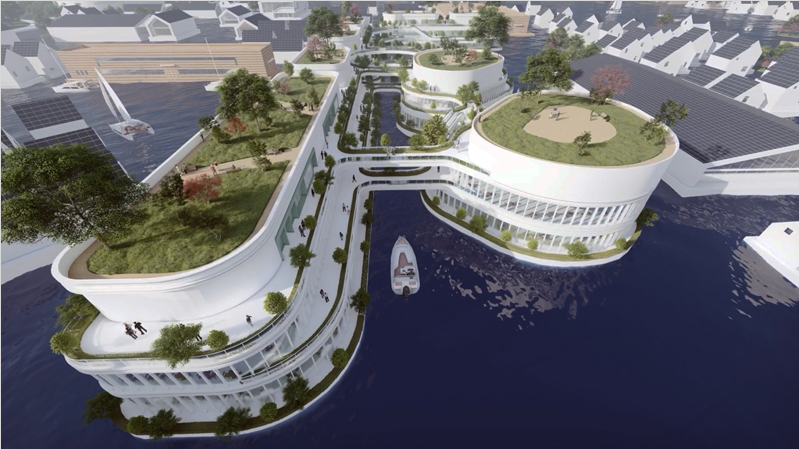
Dogen City is an ambitious project that could have a significant impact on the world. However, the project also presents some challenges, such as its high cost. The company estimates the construction cost at 100 trillion yen (approximately $800 billion).
The Japanese government has approved the project and is providing funding for its development, hoping that Dogen City will become an inspiring example of how we can address the challenges of climate change and natural disasters . For now, the city’s construction is expected to be completed by 2030.


