
A Giant’s Challenge: Lessons from the Guangzhou Airport
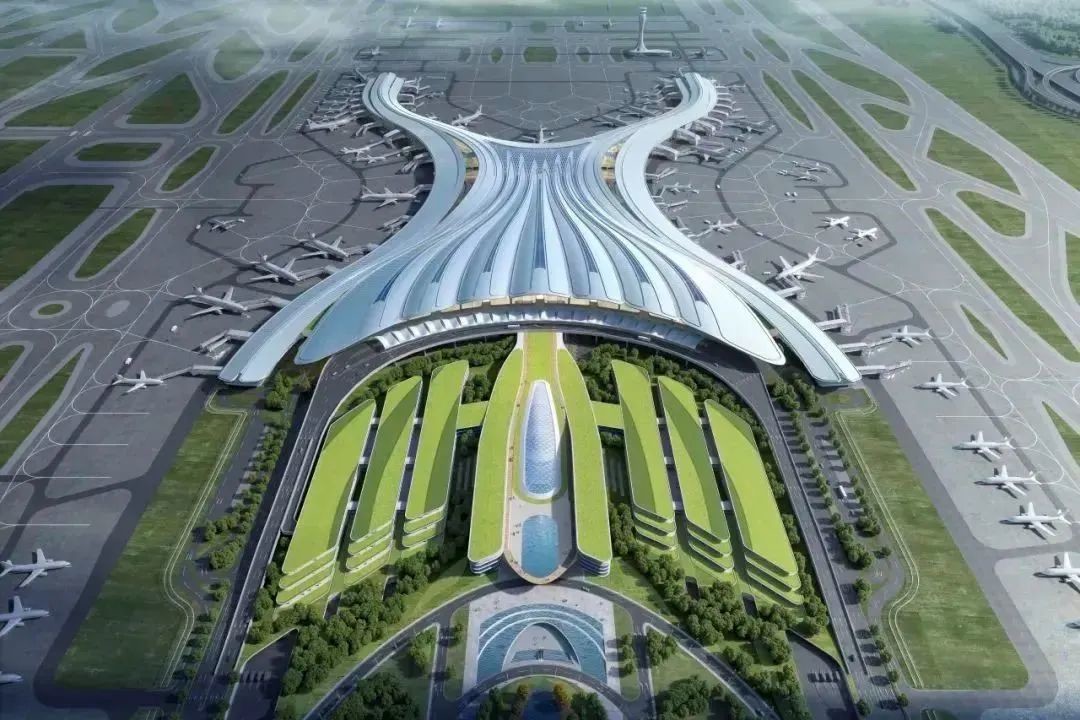
The Guangzhou Baiyun International Airport is a project with immense ambition. With a budget of over 53.77 billion yuan, it’s the largest reconstruction and expansion in the history of Chinese civil aviation. Its magnitude includes a new flower-shaped terminal, two additional runways, and a comprehensive transportation hub. The real challenge was how to manage this project without paralyzing the operations of one of the world’s busiest airports.
The Guangdong Airport Authority, the entity in charge of the project, decided that the only way to tackle this complexity was through total digitalization. Instead of relying on isolated processes, they adopted a construction methodology that integrated BIM and Digital Twins throughout the project’s entire lifecycle. This approach not only promised efficiency but also aimed to establish a new benchmark for intelligent construction in the industry.
Coherence in the Midst of Chaos
The airport project involved an unprecedented level of complexity and coordination. With 20 different disciplines, 35 participating units, and over 300 on-site personnel, collaboration was the biggest challenge. Furthermore, the work required continuous operations under and around active runways, demanding extremely precise planning to avoid disrupting air service.
To manage this enormous number of variables, the team realized they needed a unified work environment. They implemented the ProjectWise platform to create a Common Data Environment (CDE) that allowed all participants to collaborate and communicate in a timely manner. This digital centralization of the workflow reduced coordination time by 97 days and saved approximately 15 million yuan.
The Large-Scale Solution
The three-dimensional models allowed the team to perform clash detections and resolve more than 3,200 problems before on-site construction even began. This prevented delays and unnecessary expenses, contributing to a total savings of 78 million yuan just from data management and model capacity.
Additionally, the team used SYNCHRO 4D to simulate the project’s progress and virtually rehearse the construction of complex nodes and irregularly shaped sections. This digital simulation optimized procedures and also improved construction efficiency by over 35%, shortening the project schedule by 33 days. This ability to compare the digital model with the reality of the site, using technologies like laser scanning, ensured the quality and precision of the construction.
A Legacy of Innovation
The Guangzhou airport is another demonstration of how digital technologies can go beyond simple visualization. The team created a Digital Twin that served as a living tool for decision-making, from initial planning to future airport management. By integrating the Digital Twin from the preliminary stages, they were able to connect design and construction with future operations and maintenance, ensuring the model did not lose its value once the work was completed.
This project has increased the airport’s capacity to 120 million passengers per year, verified the implementation of civil aviation standards, and created a scalable route for future projects. By reducing resource waste and environmental impact, it has also shown that large-scale infrastructure construction can be efficient and, at the same time, socially and environmentally responsible.


